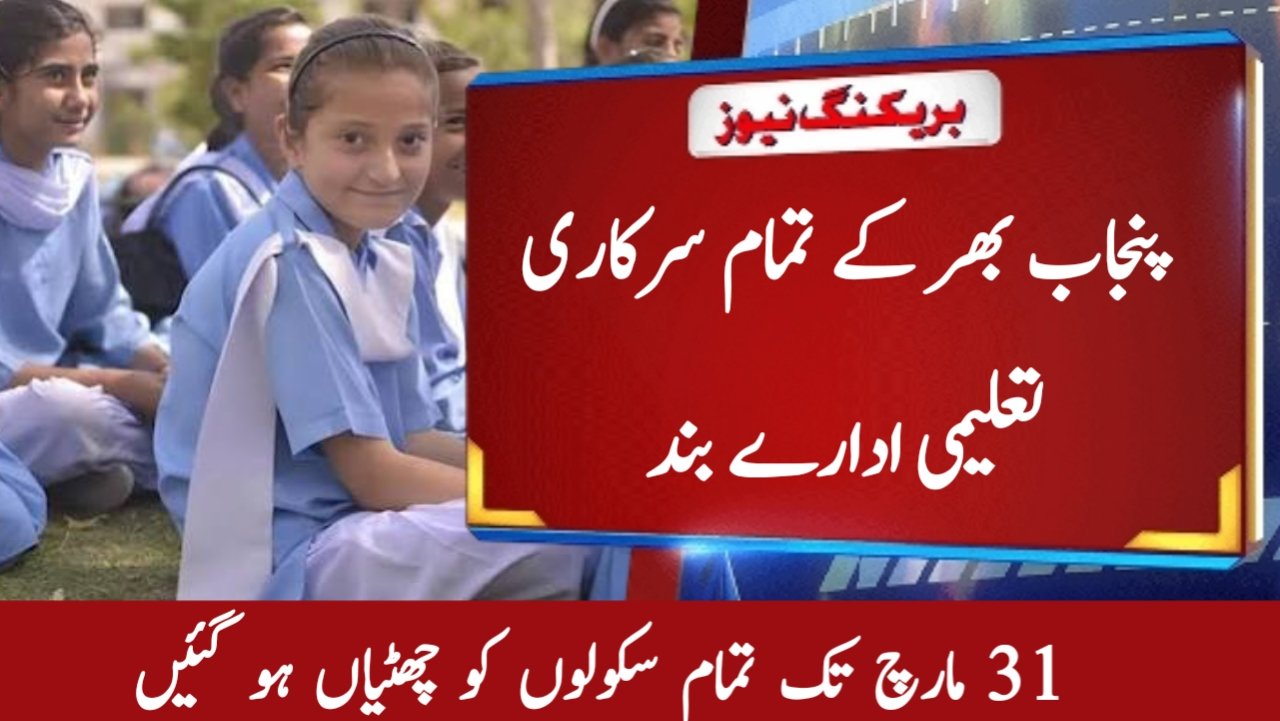
Punjab Chief Minister Maryam Nawaz Sharif has announced several emergency measures due to the ongoing petroleum crisis and economic pressure in the region. The government has decided to temporarily close all educational institutions and reduce fuel usage in government departments to manage the situation.
According to the announcement, schools, colleges, and universities across Punjab will remain closed from March 10 to March 31, 2026. However, examinations will continue according to the scheduled timetable. The government has also introduced work-from-home policies for many government departments and reduced fuel allowances for officials.

School Closure in Punjab – March 2026 Announcement
The Punjab government has announced the temporary closure of educational institutions across the province. This decision was made to reduce fuel usage and manage the current economic challenges caused by the petroleum crisis.
Key points about the closure include:
- Schools, colleges, and universities will remain closed from March 10 to March 31
- Exams will continue according to the official schedule
- Educational institutions can conduct online classes
- Students are advised to follow updates from their institutions
This step is expected to reduce daily transportation and fuel consumption across the province.

Work From Home Policy for Government Offices
Another important decision taken by the Punjab government is the implementation of a work-from-home policy for many government departments. This measure aims to reduce fuel consumption and unnecessary travel.
Under this policy:
- Only essential staff will attend offices
- Non-essential employees will work from home
- Government meetings will be held online
- Teleconferencing will be used for official discussions
The Chief Minister clarified that government operations will continue normally even if some staff members are working remotely.

Fuel Restrictions for Ministers and Officials
To control fuel usage during the crisis, the government has taken strict measures for ministers and senior officials. The use of government fuel has been significantly limited.
Important restrictions include:
- Government fuel for provincial ministers has been temporarily stopped
- Fuel and diesel allowances for officials have been reduced by 50%
- Protocol vehicles accompanying ministers have been restricted
- Only one security vehicle will be allowed when necessary
These decisions are intended to show responsible use of resources during difficult economic conditions.
Petroleum Monitoring System in Punjab
The government has also introduced a new monitoring system to control the supply and distribution of petroleum products. District administrations will play a key role in implementing this system.
Major actions include:
- Petroleum monitoring committees will be established in every district
- The Punjab Information Technology Board (PITB) will develop a track-and-trace system
- Local administration and police will assist in monitoring fuel distribution
- Strict action will be taken against illegal fuel activities
The monitoring system will help ensure fair distribution of petroleum products during the crisis.
For official updates, citizens can visit the Punjab government portal:
https://www.punjab.gov.pk
Public Guidelines and Safety Measures
The Punjab Chief Minister has also issued important guidelines for citizens during the current situation. These measures are meant to prevent panic and ensure public safety.
Public advisory includes:
- Avoid unnecessary outdoor events and gatherings
- Limit late-night shopping and unnecessary travel
- Do not store excessive essential items
- Follow government announcements and updates
The government has also postponed major outdoor events, including the cultural Horse and Cattle Show.
Economic Measures and Government Response
The Punjab government has taken these steps to manage economic pressure caused by the regional situation and fuel shortages. The Chief Minister emphasized the importance of unity and cooperation among citizens.
Additional measures include:
- Strict monitoring of transport fares in all districts
- Action against transport operators charging illegal fares
- Monitoring of supply and demand for essential food items
- Encouraging businesses to adopt work-from-home policies
These steps are designed to maintain economic stability and protect the public from unfair practices.
Conclusion
The Punjab government’s recent decisions aim to manage the petroleum crisis and economic challenges affecting the region. Educational institutions will remain closed from March 10 to March 31 while exams continue according to schedule. Work-from-home policies, fuel restrictions, and monitoring systems have also been introduced to reduce fuel usage and maintain stability.
These measures are temporary and are intended to protect public interests during the current situation.
FAQ
Q1: Why are schools closed in Punjab in March 2026?
Schools are closed from March 10 to March 31 to reduce fuel usage during the petroleum crisis.
Q2: Will exams be cancelled due to school closure?
No, exams will continue according to the official schedule.
Q3: Are government offices closed in Punjab?
Government offices are not closed, but many employees will work from home while essential staff will attend offices.
Q4: What steps are being taken to manage the petroleum crisis?
The government has reduced fuel allowances, restricted protocol vehicles, and created petroleum monitoring committees in each district.
Latest Updates
 Rehmat Card Online Registration Portal 2026 – Complete Step-by-Step Guide
 Check Your Application Status Punjab Rozgar Scheme 2026
 BISP 8171 Payment Update 2026 – Women to Receive Rs. 13,500 Today
 Punjab Nigehban Ramzan Package 2026 – How to Check Eligibility and Status
 BISP 8171 Check Online CNIC 2026 – Check Rs 13,500 Payment Status
 Ehsaas 8171 Check Online CNIC 2026 – Check BISP Payment and Eligibility